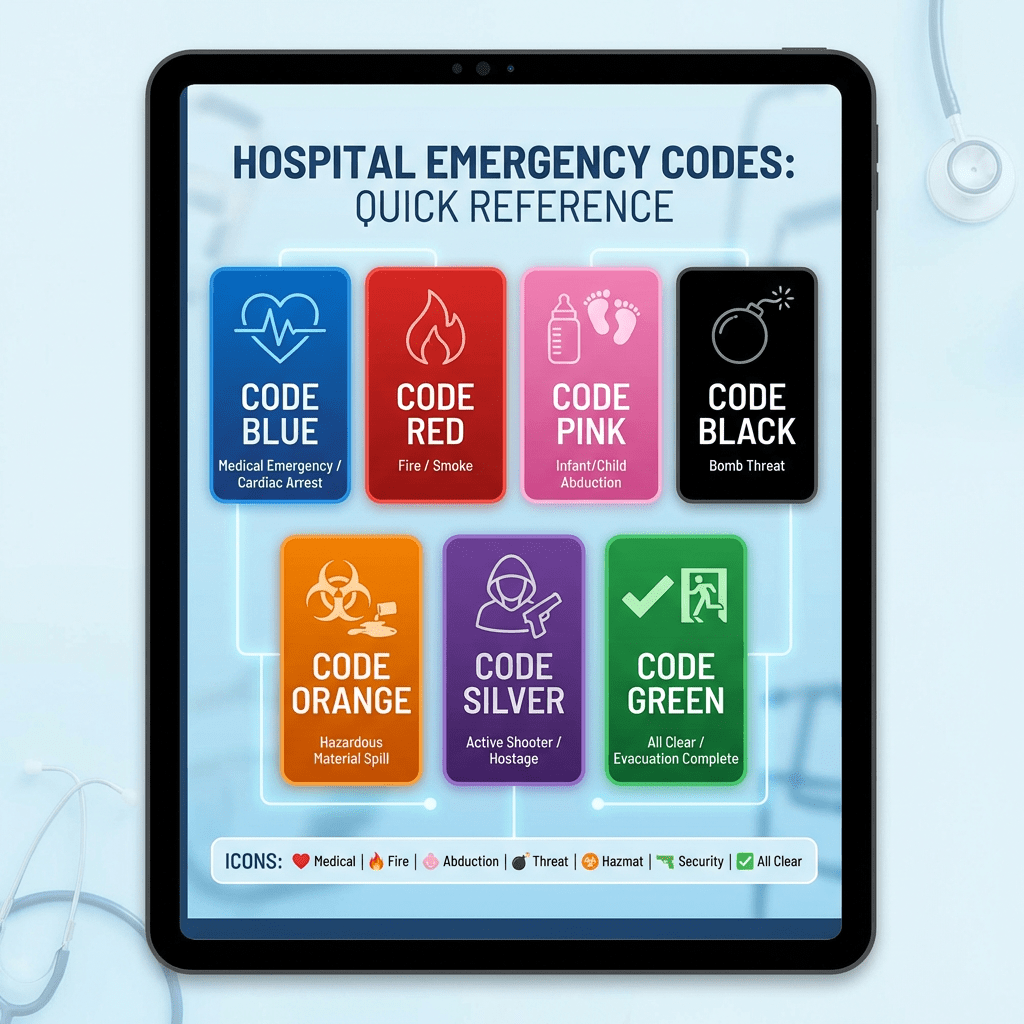
Hospitals often use color codes to alert staff to an emergency or another significant event. These emergency codes allow trained hospital personnel to respond quickly and appropriately to various incidents.
Hospital emergency codes have often varied widely by location — even within hospitals in the exact same community — often leading to confusion. In 2023, anonymous electronic surveys asked 304 employees at five Georgia healthcare facilities to identify the codes for 14 different emergencies. On average, participants could correctly identify emergency codes just 44% of the time. Many participants reported that codes were only introduced at their orientation and were not practiced regularly.
“The results of our study suggest a prompt response to such incidents is likely to be poor, as most employees were unaware of the meanings or actions of these notifications,” co-author Morgan Taylor wrote in a news release.
This potential for confusion has led many states to adopt standardized codes for all hospitals.
In 2000, the Hospital Association of Southern California (HASC) released a handbook, “Healthcare Emergency Codes: A Guide for Code Standardization,” strongly urging a uniform code system after three people were killed in a shooting incident after the wrong emergency code was called. Code Gray, which typically means a combative person, was announced, drawing staff members toward the shooter. At the time of this incident, in California hospitals, 47 different codes were used for infant abduction and 61 were used for a combative person.
Three years later, Maryland mandated that all acute hospitals in the state have uniform codes. In fact, Maryland is the only state to mandate that hospitals implement uniform code terminology, requiring the adoption of a standard color code system as a component of emergency disaster plans.
 Amy Rock Editorial, LLC