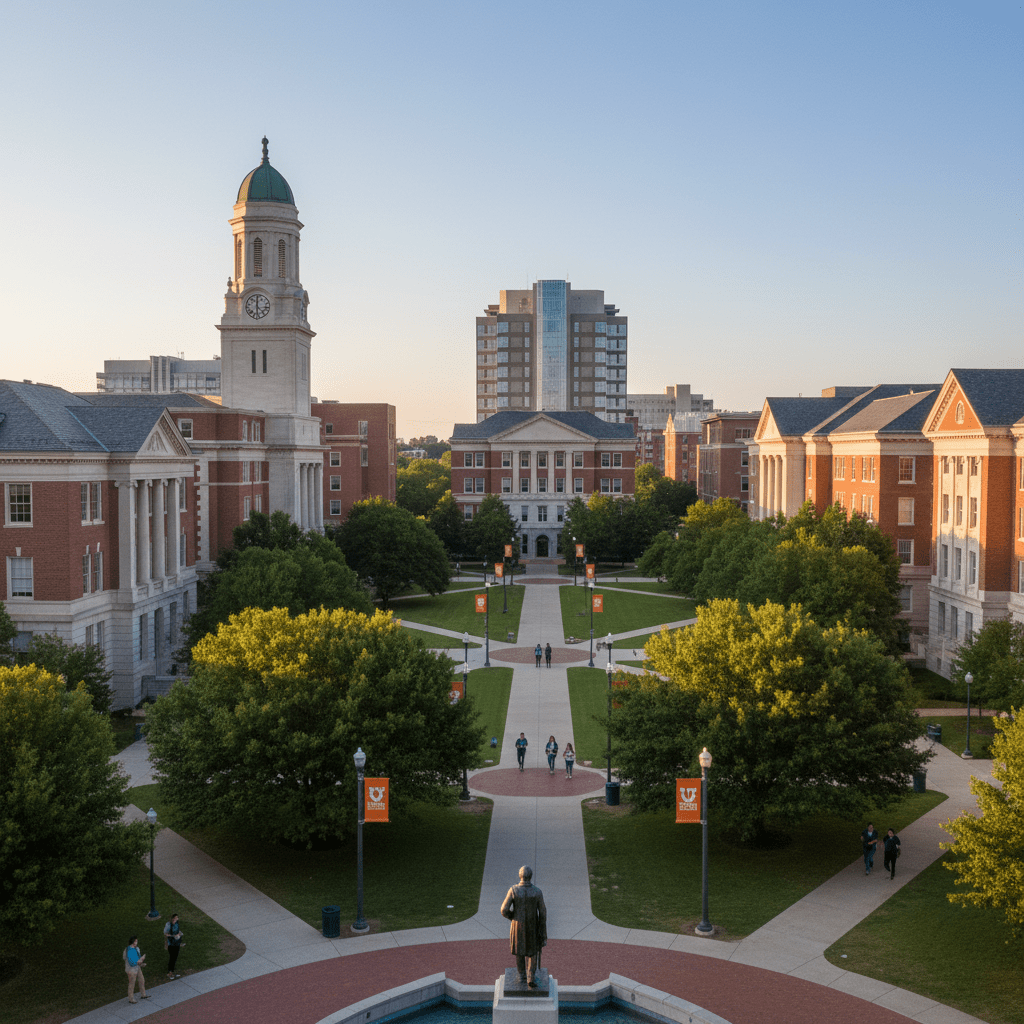
With nearly 140 academic medical centers across the United States, administrators are constantly tasked with finding persuasive and innovative ways to entice the brightest minds to choose their facility for their studies. One of those facilities is the University of Tennessee Health Science Center (UTHSC), established in 1911 and located in the heart of Memphis’ Medical District.
UTHSC houses six doctoral-degree-granting colleges and educates 75% of the state’s dentists, 40% of its pharmacists and 40% of its physicians. According to a report conducted by a professor of economics at the University of Memphis, in Fiscal Year 2017, the direct economic contributions of all four UTHSC locations was estimated to be $4 billion, 74% of which came from the Memphis campus.
In order to continue this success and compete with dozens of other similar institutions, Dr. Kennard Brown, executive vice chancellor and COO at UTHSC, recognized the dire need to invest in improving the campus’ nearly 80 buildings and building systems, many of which are more than half a century old.
“When we compete for students, we compete for the best and the brightest, not just in the state of Tennessee but from across the country,” Dr. Brown told Campus Safety. “As a public university, we’re competing against private institutions — the Wake Forests, the Dukes. To be in the top tier of all the academic medical centers out there takes an investment of resources to really convince students that your institution is somehow different from the others.”
The types of resources Dr. Brown knew the facility would have to invest in, especially given heightened awareness regarding violence at schools, universities and hospitals, were related to security.
“Campus safety is front of mind for us, and it’s one of the things we felt was critically important to us being successful in recruiting high-caliber students,” he says. “To be a top-tier institution that has top-tier funded science researchers, they have to feel like this place is safe.”
With a three-phase, approximately $30 million security and safety project meticulously laid out, the next step was choosing an integrator to make UTHSC’s vision a reality.
 Amy Rock Editorial, LLC