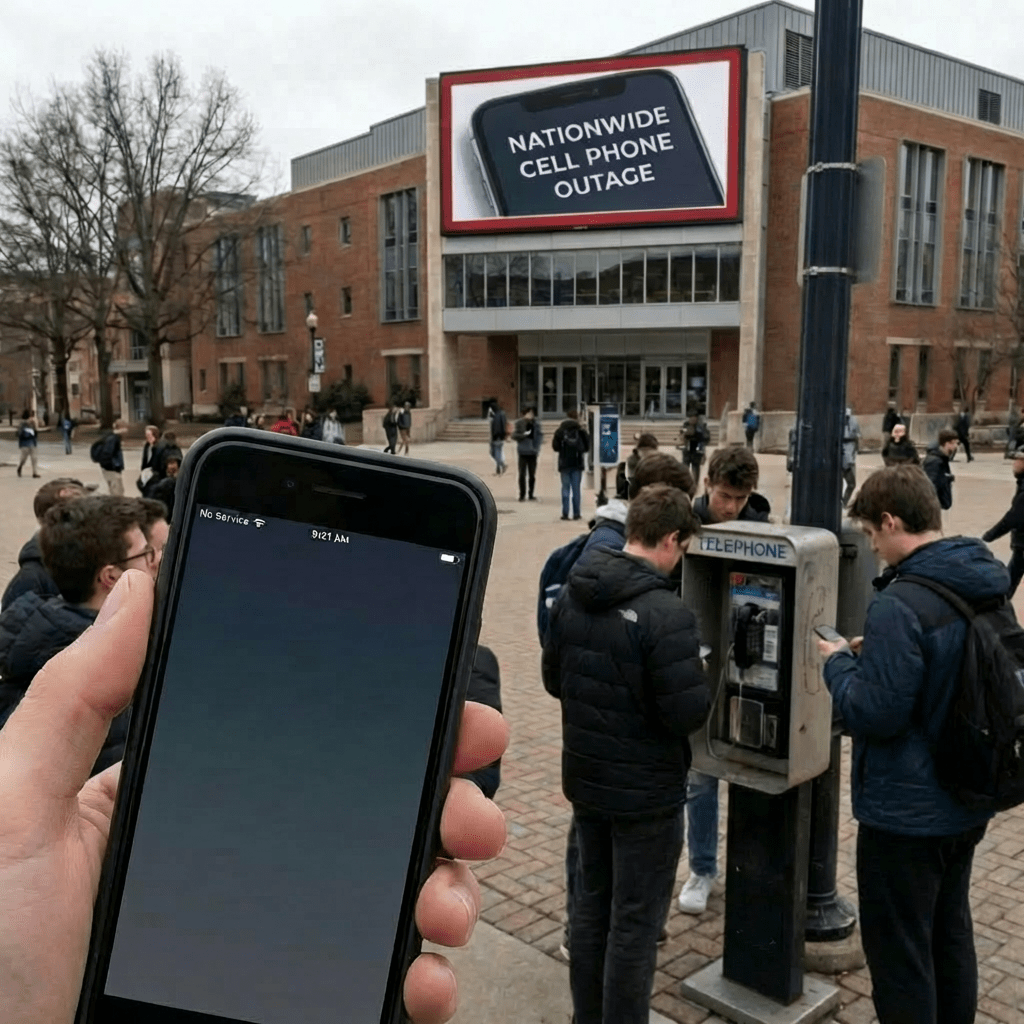
On Feb. 22, an AT&T network service outage left over 71,000 U.S. customers without calling or data capabilities for up to 12 hours. The outage is under investigation by New York Attorney General Letitia James, who noted the outage left many unable to call 911.
While looking over a petition urging the University of Georgia to install emergency call boxes, also referred to as blue light phones, following the on-campus murder of 22-year-old Laken Riley, one petitioner’s comment stood out to me.
“Only 4% of public universities don’t have a blue light phone system,” they wrote. “Yesterday there was a nationwide cell phone outage. We can’t depend only on an app for students’ safety.”
It has long been a leading practice to have multiple modes of emergency notification. Emergency communication should be no different.
In Campus Safety’s 2024 Emergency Notification Survey, 93% of respondents said their organization uses more than one emergency/mass notification system, allowing for the strengths of one technology to compensate for the weaknesses of others.
The potential for weaknesses was significantly highlighted during the 2022 Robb Elementary School mass shooting. Poor Wi-Fi connection and mobile phone coverage, as well as a staff desensitized to alerts by frequent notifications, impacted the effectiveness of the school’s emergency alert system, according to a preliminary report compiled by the Texas House investigative committee.
Read the full article.
 Amy Rock Editorial, LLC