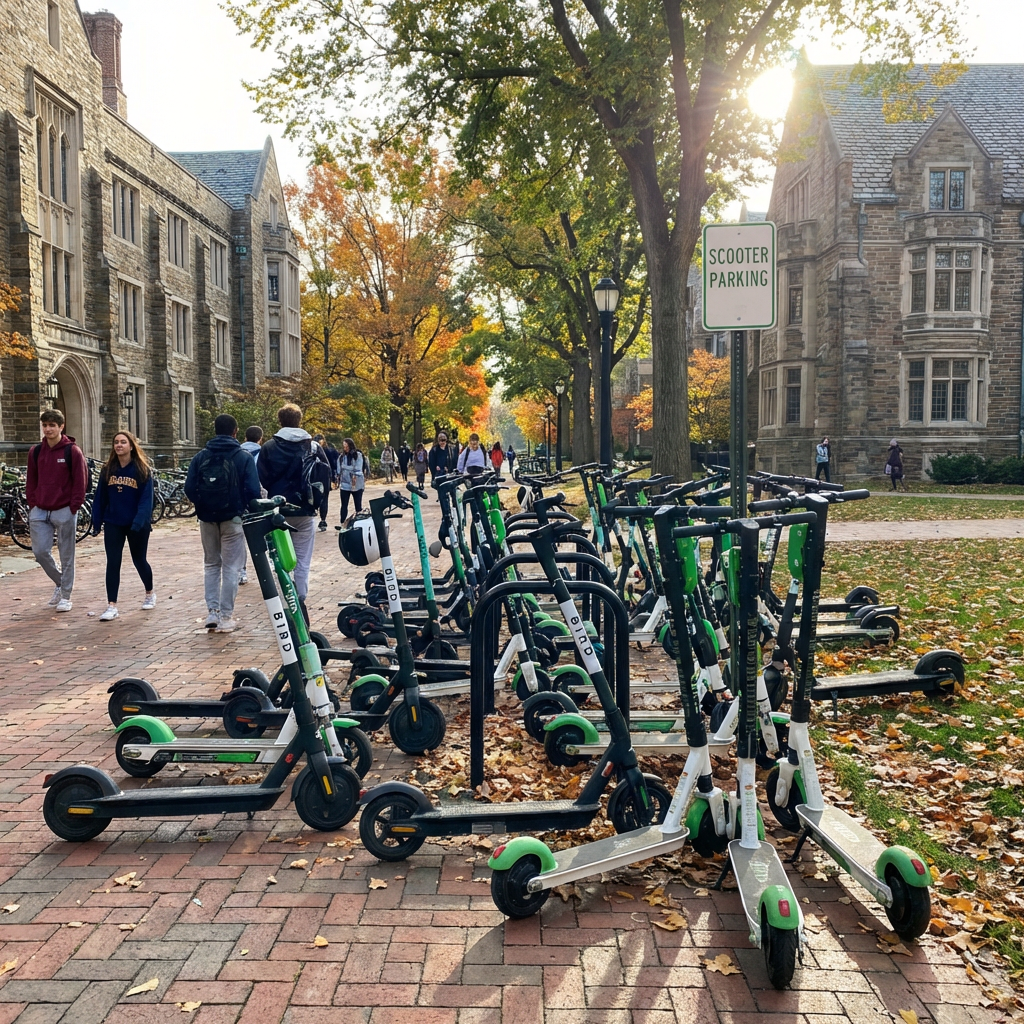
A surge in electric scooter injuries in recent years has prompted many K-12 schools and colleges to implement bans or significant restrictions on micromobility products.
Injuries associated with all micromobility devices — including e-scooters, e-bikes, and hoverboards — increased nearly 21% from 2022 to 2021, according to the U.S. Consumer Product Safety Commission’s (CPSC) report, Micromobility Products-Related Deaths, Injuries, and Hazard Patterns. From 2017 to 2022, e-scooter injuries rose from 8,566 to 56,847. Children 14 years and younger also accounted for about 36% of micromobility injuries from 2017 to 2022 despite only making up 18% of the U.S. population.
More recently, the U.S. Consumer Product Safety Commission’s (CPSC) National Electronic Injury Surveillance System (NEISS) found e-scooter injuries rose from just under 30,000 in 2020 to 118,485 in 2024 — nearly twice the 2023 total of 64,329.
Emergency departments across the United States have also documented significant increases in e-scooter–related hospital visits. According to a study from the American College of Surgeons (ACS), the annual cost of e-scooter and e-bike hospitalizations rising nearly five times over between 2016 and 2020 — from 6.6 million to 35.5 million — according to a study from the American College of Surgeons.
CPSC’s report says there were an estimated 360,800 emergency department visits related to all micromobility devices from 2017 to 2022. Of those visits, 169,300 (47%) were linked to scooters. The researchers also registered 233 micromobility-related deaths during that time frame, with nearly half (111) from e-scooter incidents, most commonly as a result of collisions with cars and/or control issues.
 Amy Rock Editorial, LLC